By Star & Shield Clothing Fashion Blog
Behind the stark silhouettes, experimental sneakers and constantly evolving YZY aesthetic sits something far less visible but equally important: a network of corporations, trademark registrations, attorneys, filing deadlines and intellectual-property disputes.
For Ye, the artist formerly known as Kanye West, fashion has never been simply about garments. The names, symbols and concepts surrounding the brand can themselves become valuable commercial assets—and the public trademark record shows how those assets are organized, registered and defended through corporate entities.
The machinery is distinctly capitalist, even when the creative philosophy surrounding it may appear to reject conventional fashion-industry structures.
The names behind the name
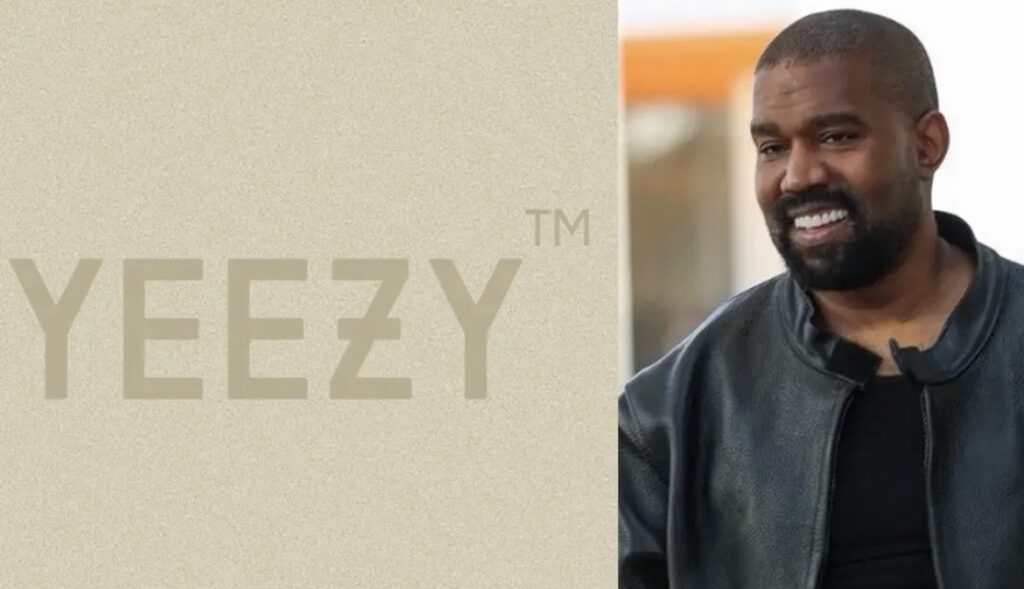
One of the most important corporate vehicles associated with Ye’s intellectual-property portfolio is Mascotte Holdings, Inc., a California corporation that has accumulated a substantial portfolio of trademark applications and registrations.
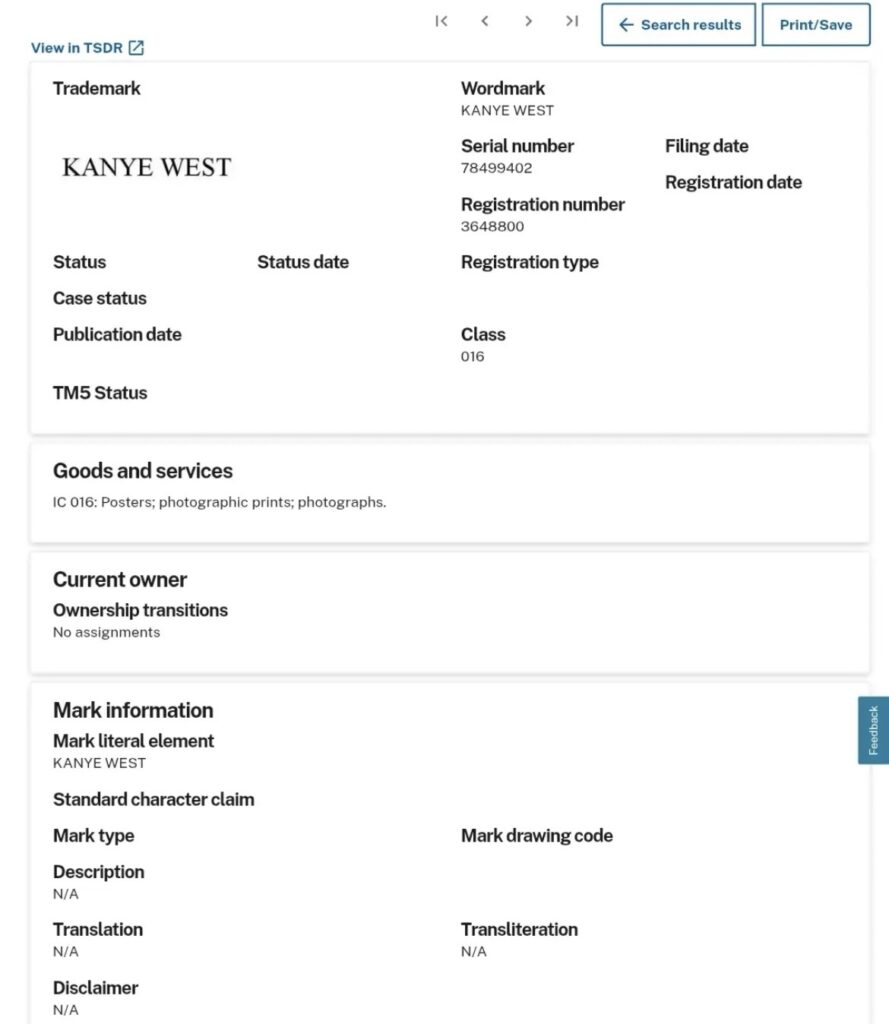
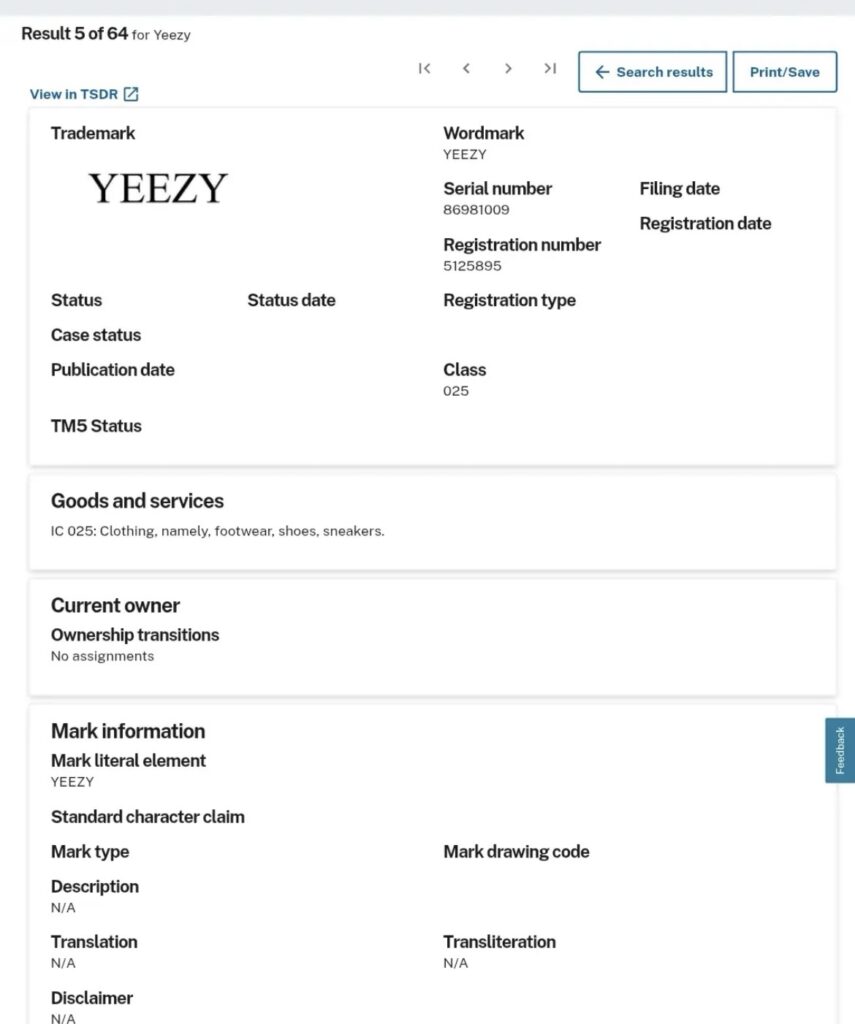
Public trademark records show Mascotte connected with major marks including YEEZY, YZY and KANYE WEST. The U.S. Patent and Trademark Office’s Trademark Trial and Appeal Board records, for example, identify Mascotte Holdings, Inc. in proceedings involving the YEEZY and YZY marks and show the company actively participating in opposition proceedings to protect those names.
That distinction matters. A celebrity may be the public face of a brand, but trademark ownership can sit inside a corporation. The corporation becomes the legal owner of the commercial identity, while lawyers and trademark professionals handle the less glamorous work of applications, office actions, renewals, oppositions and enforcement.
The YZY footwear registration provides a particularly clear example. Trademark records identify YZY as a registered mark covering footwear, with registration dating to 2017. The record also shows attorney Brad D. Rose of Pryor Cashman LLP, a New York law firm, as attorney of record.
Rose’s involvement with Ye-related trademark matters goes back further. TTAB records show Brad D. Rose and Pryor Cashman LLP representing Mascotte Holdings and Kanye West in proceedings concerning YEEZY and YZY marks.
In other words, the protection of the Ye/Yeezy identity has not simply been an informal exercise in putting a logo on clothing. It has involved specialist trademark counsel and the formal machinery of the U.S. trademark system.
Mascotte is more than a single brand filing
Mascotte’s portfolio extends well beyond one sneaker name.
A public database tracking USPTO records lists hundreds of trademark applications associated with Mascotte Holdings, including marks connected with different areas of entertainment, fashion and consumer products. The record should be read carefully—applications can be abandoned, challenged, reassigned or never developed into commercial products—but the sheer breadth illustrates how aggressively intellectual property can be mapped around a celebrity-led creative enterprise.
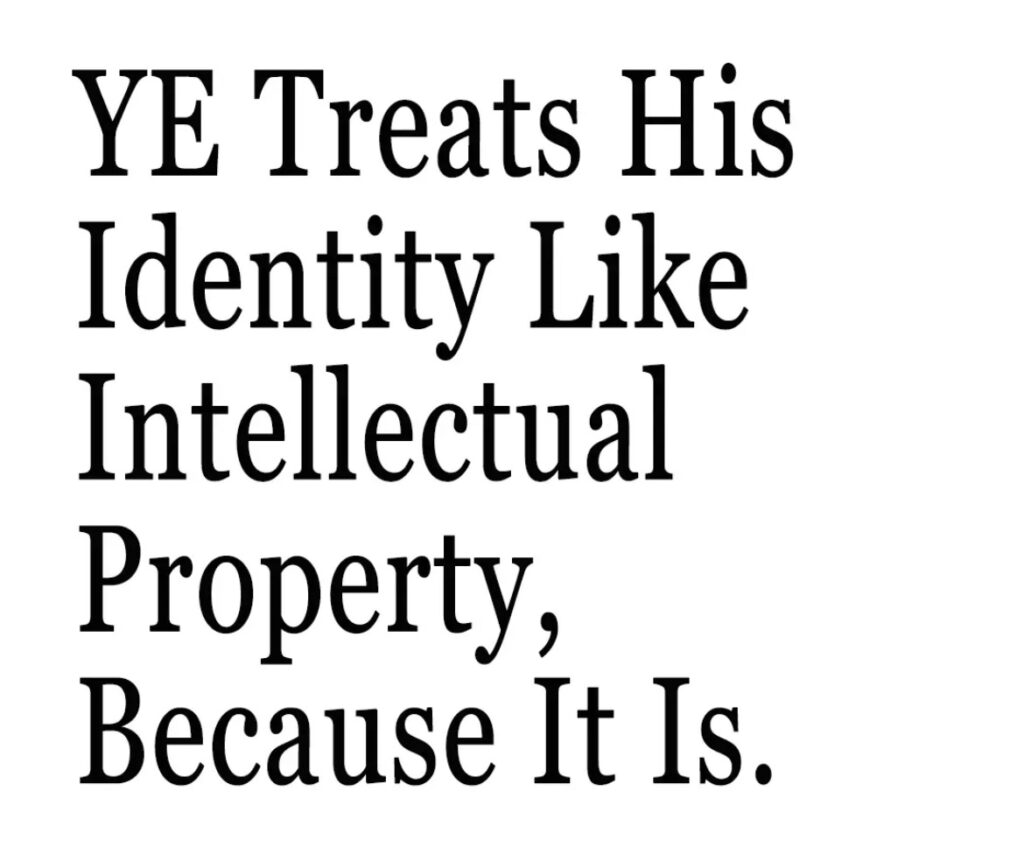
One particularly revealing group of filings concerns YE.
A 2021 application filed by Mascotte identified Brad D. Rose as attorney and sought protection for a wide range of activities and services, including fashion-related consulting, entertainment, licensing and other commercial activities. Another YE application covered an extensive range of accessories and clothing-related components, including pins, patches, buckles, zippers, clasps and other fashion accessories.
These filings demonstrate an important principle of modern brand building: the asset is not necessarily the finished product.
The name itself can be the asset.
A trademark can reserve commercial territory around a word, phrase, logo or identity so that the owner has legal tools available if another party attempts to market confusingly similar goods or services.
The USPTO: where the aesthetic meets bureaucracy

At the center of this system is the United States Patent and Trademark Office (USPTO).
The USPTO does not operate as Ye’s private enforcement department. Its role is to administer the federal trademark registration system. Once a mark is registered, the owner is responsible for maintaining and policing its rights.
The agency explicitly explains that trademark owners must file maintenance documents at prescribed intervals. A Section 8 declaration is generally required between the fifth and sixth years following registration, while combined Sections 8 and 9 filings are required between the ninth and tenth years and every ten years thereafter.
That is the less glamorous side of fashion entrepreneurship.
A brand name that appears effortless on a hoodie or sneaker may have a corresponding legal calendar involving filing windows, specimens, fees, declarations and renewal requirements.
The USPTO’s Trademark Status and Document Retrieval (TSDR) system allows the public to examine application and registration records, including status information and documents associated with individual trademark files.
As of 2026, the USPTO has also been moving maintenance and renewal filings into its newer Trademark Center platform, further digitizing the administrative infrastructure behind federal trademark ownership.
The lawyers are part of the architecture
The attorneys behind these filings are not incidental characters in the story.
Trademark prosecution requires specialized knowledge: selecting appropriate classes of goods and services, preparing descriptions, responding to examining attorneys, submitting evidence of use, monitoring competing applications and, when necessary, opposing potentially conflicting marks before the Trademark Trial and Appeal Board.
Brad D. Rose of Pryor Cashman LLP is one lawyer whose name appears repeatedly in the historical trademark record surrounding Mascotte, YEEZY and YZY. TTAB records identify Rose and Pryor Cashman at the firm’s former 7 Times Square, New York address in proceedings involving Mascotte Holdings and Kanye West.
The record also illustrates how legal representation can evolve as the portfolio expands.
For trademarks associated with Ox Paha Inc., another corporate entity connected with Ye’s business activities, public filing records show different trademark professionals appearing on different matters. For example, an Ox Paha filing for the mark YEWS identifies Manoj N. Shah of Manoj N. Shah Brand Counsel, P.C. as attorney, with the correspondence address in Pasadena, California.
Other Ox Paha filings identify attorneys including Gregory K. Nelson, while TTAB records show outside counsel becoming involved in disputes and opposition proceedings.
This is what a serious intellectual-property portfolio looks like from the inside: not one permanent lawyer doing everything, but a collection of attorneys, trademark specialists, corporate entities and filing systems working around different assets and disputes.
Ox Paha and the second layer of the empire
Ox Paha Inc. provides another useful window into the structure.
Public trademark records identify Ox Paha as a California corporation using an address on Melrose Avenue in Los Angeles. Its filings cover a wide range of marks and commercial concepts.
The company has also been used for newer intellectual-property filings. In 2025, for example, reporting based on USPTO documents identified Ox Paha as the applicant behind the “Wife By Husband” trademark application, covering printed publications including biographies and picture books.
More recently, the Ox Paha record has included filings for other concepts, demonstrating how the corporation can function as a vehicle for registering ideas that extend beyond conventional apparel.
That is important because trademark portfolios frequently reveal possible commercial intentions rather than guaranteed products.
A filing does not necessarily mean that a collection, shoe, book, restaurant or entertainment project will ever launch. Trademark owners routinely register names across multiple categories to preserve strategic options. A trademark application is therefore evidence of an attempt to secure legal rights—not proof that a product is coming to market.
A family of intellectual-property vehicles
The existence of Mascotte and Ox Paha also complicates the simplistic idea that “Ye owns a brand.”
Legally, there can be several layers between the individual and the consumer-facing identity.
There is the individual artist.
There are corporations.
There are trademarks.
There are attorneys and trademark agents.
There are federal registration records.
There are state corporate records.
And there are courts and administrative tribunals available when somebody challenges or allegedly infringes those rights.
That architecture is what turns a name into a commercially defensible asset.
The USPTO itself notes that trademark owners are expected to police and enforce their rights. The office may refuse registration of a confusingly similar pending mark, but it does not independently police the marketplace on behalf of every trademark owner.
The responsibility ultimately falls on the rights holder and its legal advisers.
From creative expression to intellectual property
This is where Ye’s fashion story becomes particularly interesting.
His public aesthetic has often been associated with anti-establishment imagery, stripped-back retail experiences, unconventional marketing and skepticism toward traditional luxury structures.
Yet the legal architecture surrounding a fashion empire is highly conventional.
The trademark system rewards precisely the kind of disciplined asset management associated with major corporations.
File the mark.
Identify the goods and services.
Monitor examination.
Respond to objections.
Register the mark.
Maintain it.
Renew it.
Watch competitors.
Oppose conflicting applications when necessary.
And, if required, litigate.
The contradiction is fascinating: the spectacle can be radically unconventional while the machinery protecting the spectacle is remarkably orthodox.
Trademark portfolios as strategic maps
For fashion observers, trademark records can therefore function almost like a blueprint.
A designer’s Instagram account may reveal what is being worn today. A runway show may reveal what is being produced this season. But trademark databases can reveal what a company wants to keep commercially available tomorrow.
That does not mean every filing becomes a product.
Instead, the portfolio can be understood as a collection of options.
Names can be protected before a product exists. Categories can be claimed before a retail strategy is finalized. Companies can file for seemingly unrelated goods because the cost of securing a trademark can be relatively small compared with the potential value of controlling a commercially powerful name.
Ye’s extensive filing history demonstrates exactly this phenomenon.
The business behind the myth
There is a tendency to discuss Ye primarily through the language of celebrity: the controversial artist, the designer, the provocateur, the cultural disruptor.
But the corporate records tell another story.
They show an entrepreneur operating through corporate entities, attorneys and formal intellectual-property systems.
Mascotte Holdings has appeared repeatedly in the protection and enforcement of YEEZY, YZY and KANYE WEST-related rights. Ox Paha has been used for another substantial body of trademark activity. Attorneys including Brad D. Rose and Manoj N. Shah, alongside other trademark professionals, have appeared in different portions of that legal record.
The registration office itself—the USPTO—provides the administrative infrastructure that keeps those rights alive.
And behind every registration number is a less glamorous reality: deadlines, declarations, specimens, fees and legal paperwork.
The real lesson for fashion
For emerging designers, there is a lesson here that extends far beyond Ye.
A fashion brand is not only a collection of clothes.
The name is an asset.
The logo is an asset.
The product names can be assets.
The company structure matters.
The ownership structure matters.
And the legal strategy surrounding those assets can determine whether a successful label remains defensible as it grows.
Ye’s career provides an unusually visible case study because the creative persona is so closely intertwined with the commercial identity. But the underlying mechanism is familiar to almost every serious fashion company.
The clothes may change.
The silhouettes may change.
The collaborators may change.
The public persona may change.
But the legal infrastructure has one objective: preserve control over the names and intellectual property that can continue generating commercial value.
That is the hidden infrastructure behind the aesthetic.
Star & Shield Clothing Fashion Blog sees this not merely as a story about Kanye West, but as a case study in how modern fashion converts cultural identity into intellectual property—and then surrounds that property with corporations, lawyers, registration offices and carefully maintained legal rights.
In the end, the most revealing part of the Ye empire may not be what appears on the garment.
It may be the registration number attached to the name.